

Buying Your First Farrier Apron | 7 Features That Actually Matter
Buying your first farrier apron is one of those decisions that quietly shapes your entire workday. The right apron protects your thighs from a 1,200-pound horse shifting unexpectedly, keeps your tools within arm’s reach, and supports your lower back through hours of bent-over hoof work. The wrong one chafes, slips, sags under tool weight, and leaves you sore by lunch.
The problem? Walk into any farrier supply store (or scroll through any online catalog) and you’ll see dozens of options leather, synthetic, split-leg, full-coverage, padded, unpadded, men’s, women’s.
For a first-time buyer, the noise is overwhelming. So in this guide, we’re cutting straight to the seven features that actually matter when you’re choosing your first professional farrier apron, the features that separate gear you’ll still be wearing in five years from gear you’ll regret in five weeks.
By the end, you’ll know exactly what to look for, what to avoid and which Equine Care aprons match different working styles. Let’s get into it.
So let’s look at the seven features that matter most.
What Should You Look for When Buying Your Farrier Apron? 7 Key Features
1. Material Quality: Multi-Layer Leather and Canvas Construction
The single biggest indicator of a serious farrier apron is what it’s made from. Look for 2mm cowhide suede leather as the primary protective layer. Cowhide is the trade standard for a reason, it resists abrasion from rasps and clinchers, absorbs impact from hoof strikes, and naturally insulates against heat from hot shoes during forge work.
But leather alone isn’t enough. The best aprons use a multi-layer construction: a tough outer cowhide shell, a reinforced mid-layer of heavy-duty canvas (typically 500 GSM or higher), and an inner liner that sits comfortably against your jeans. Some premium models use a leather–foam–leather sandwich for additional cushioning without sacrificing flexibility.
What to avoid: single-layer split leather, thin chrome-tanned hides, or all-synthetic aprons marketed for hobbyists. They tear, lose shape after a few months, and offer almost no impact resistance. If you’re going to wear this thing eight hours a day, the extra cost of cowhide pays for itself within the first season.
Pro tip: Ask whether the apron requires a break-in period. A short break-in is actually a good sign it means the leather is dense enough to hold its shape long-term. Aprons that feel “floppy” out of the box typically wear out faster.
2. Foam Padding for Impact and Pressure Protection
This is where modern padded farrier aprons outclass older designs. Foam padding is lightweight, closed-cell, and absorbs sudden impacts without compressing permanently. Strategic foam panels at the thighs and knees protect against two of the most common contact zones: the horse’s knee/cannon hitting your thigh, and your own knee resting on hard ground during clinching.
For a first apron, look specifically for:
- Thigh padding — protects against accidental hoof strikes and the rasp resting against your leg.
- Knee padding — vital if you’re kneeling for nail driving or finish work.
- Lumbar padding — covered separately under feature #4, but worth flagging here as part of the same EVA system.
Some aprons use a 4-layer construction (leather + canvas + EVA foam + air mesh), which gives you the best balance of protection, weight, and breathability. This is the configuration most working farriers gravitate toward after their first year.
Quick reality check: Padding does add a small amount of weight, but in exchange you get drastically reduced fatigue. After a long shoeing day, your knees and thighs will tell you exactly why this feature matters.
3. Adjustable Waist and Thigh Straps for a Custom Fit
Fit is the most under-appreciated feature in any farrier work apron. An apron that fits poorly will slip, twist, or pull on your hips throughout the day — and you won’t notice the source of your fatigue until you take it off.
A quality adjustable farrier apron should offer:
- A 28″–52″ adjustable waistband with a wide range to accommodate different body types and layered clothing in winter.
- Reinforced thigh straps with quick-release buckles — these stop the apron from swinging when you bend over a hoof.
- Padded contact points where straps press against the body to prevent rubbing and skin irritation.
Quick-release buckles deserve special mention. When a horse spooks and you need to step clear in a hurry, fumbling with a knotted strap is the last thing you want. Buckles let you exit the apron in under two seconds a small detail that becomes a serious safety feature.
If you’re a woman or have a smaller frame, look for aprons with a contoured ergonomic cut and pelvic shaping rather than a unisex straight cut. The fit difference is significant, especially around the hips and waist.
4. Built-In Lumbar and Back Support
If there’s one feature that separates a beginner-grade apron from a true professional farrier apron, it’s integrated back support. Farriery is bent-over work, and the lower back takes the full brunt of every trim, every nail, every clinch.
The best modern aprons include a neoprene-padded lumbar belt that wraps around the lower back and integrates with the waistband. This isn’t a separate brace you have to buy it’s engineered directly into the apron, which keeps weight balanced and prevents the dreaded apron sag that pulls your shoulders forward.
Why this matters for your first apron: posture habits form in the first six months. If you spend that time fighting against an unsupported apron, you’ll develop compensatory movements that lead to chronic injury. If you start with proper lumbar support, your spine learns the right loading pattern from day one.
What to look for:
- A wide neoprene back panel (not just a thin strap).
- Adjustable tension so you can tighten the lumbar zone without overtightening the waist.
- Breathable backing — neoprene can get hot, so air mesh underneath is a big plus.
5. Smart Tool Pockets, Hammer Loops, and Magnetic Nail Holders
A farrier apron is also a wearable toolbox. A well-designed farrier apron with knife pockets and magnetic nail holders can save you up to 30 minutes per shoeing session by eliminating the constant walk back to your tool box.
For your first apron, prioritize this storage layout:
- 4 reinforced knife pockets — sized to hold loop knives, straight knives, and a hoof pick without the blades poking through.
- 2 hammer loops — positioned on each hip so you can grab your driving hammer with either hand.
- 2 magnetic nail holders — strong enough to hold a fistful of horseshoe nails without dropping them when you bend.
- Ambidextrous placement — pockets and loops mirrored on both sides, which is essential if you switch hands or work with another farrier.
Pocket reinforcement matters as much as pocket count. Knife edges destroy thin pockets within weeks. Look for double-stitched seams and leather-lined pocket interiors. Magnets should be sewn into a sealed compartment so they don’t shift around or fall out during heavy use.
6. Length and Coverage: Waist-to-Knee Is the Sweet Spot
Apron length is a personal decision, but for a first hoof trimming apron, the waist-to-knee range (roughly 23″ to 29″ depending on your height) hits the best balance between protection and mobility.
Here’s a quick sizing reference:
- 23 inches — best for compact builds, women, and farriers who prioritize freedom of movement.
- 25 inches — the most common length, suits average builds and full-time hoof care.
- 27 inches — taller farriers and those who want extra knee coverage.
- 29 inches — maximum coverage for forge work and heavy shoeing.
Going too short leaves your knees exposed during clinching. Going too long restricts your stride when moving between horses. If you’re unsure, measure from your natural waist (just above the hip bone) to the top of your kneecap — that number gives you the apron length you want.
A second consideration is split-leg vs. solid-front design. Split-leg farrier chaps offer maximum mobility for fast-paced shoeing days, while solid aprons give better protection during forge work where sparks are a concern. For a first apron, a hybrid design with split legs and reinforced inner panels is the most versatile choice.
7. Breathability and Weight Balance
The seventh feature is the one most beginners ignore until summer arrives and they’re drenched in sweat by 10 a.m. A heavy, non-breathable apron isn’t just uncomfortable; it actively shortens your workday by causing premature fatigue.
Look for these breathability features:
- 195 GSM air mesh lining on the inner side of the apron — this allows airflow against your jeans.
- Ventilation panels at high-sweat zones (lower back, inner thigh).
- Lightweight overall construction — most quality aprons sit between 2.5 and 4 pounds. Anything heavier than 5 pounds will wear you out quickly.
Weight balance also matters. An apron that loads tools across the hips (rather than dragging from the waistband) keeps your center of gravity stable. Aprons with a wide, padded waistband distribute weight more evenly than those with a thin strap, regardless of how heavy your tools are.
If you live in a hot climate or work in covered barns with poor ventilation, breathability should be near the top of your priority list — not at the bottom.
Top 5 Equine Care Farrier Aprons to Match Every Working Style
Now that you know what to look for, here are five professional-grade aprons from the Equine Care collection each engineered to nail every one of the seven features above, with different strengths for different working styles.
1. Crimson Shield Farrier Apron (23–29 Inch) | Best for Compact Coverage & Lumbar Support
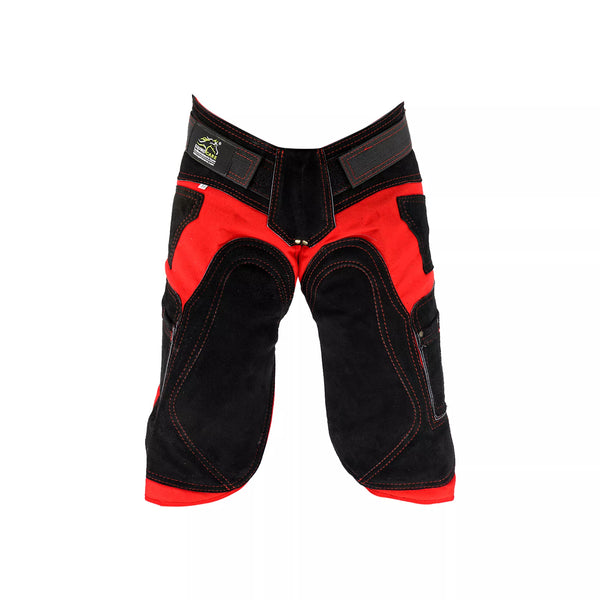
The Crimson Shield is engineered for farriers who want compact waist-to-knee coverage without sacrificing protection. Built with 2mm premium cowhide suede, 500 GSM heavy-duty canvas, and breathable 195 GSM air mesh, it delivers 4-layer protection that absorbs impact and reduces fatigue. The neoprene-padded lumbar panel offers serious back support, while four reinforced knife pockets and two strong magnets keep tools organized for both right- and left-handed farriers.
Best for: First-time buyers who want premium back support in a compact, mobile design.
2. Farrier Apron For Hoof Trimming | Best for Lightweight, Breathable Performance

If breathability is your priority — particularly in warm climates or long summer shoeing days — the Farrier Apron For Hoof Trimming is built around airflow without compromising on protection. The signature black-and-blue finish layers cowhide suede over a 500 GSM canvas core, with foam padding and a 195 GSM air mesh inner liner that keeps you dramatically cooler than a standard leather apron. Adjustable 28″–52″ waist, padded lumbar belt, and quick-release thigh straps round out the package.
Best for: Hot-weather farriers and anyone working long days who fatigues from heat.
3. Equine Care Full leather farrier apron | Best for Heavy-Duty Daily Use
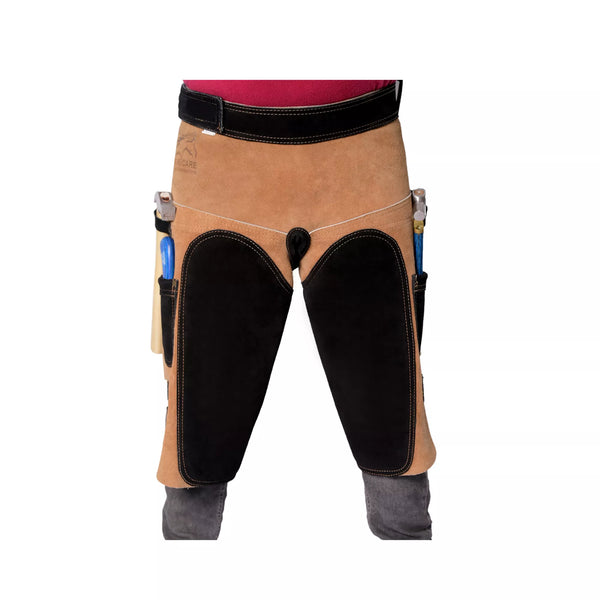
Full leather farrier apron is the workhorse of the Equine Care lineup, a 25-inch heavy-duty leather farrier apron built around a three-layer leather–foam–leather construction. Premium 2mm cowhide on both outer and inner faces sandwiches an EVA foam core, delivering advanced cushioning and long-lasting strength. Equipped with dual hoof knife pockets, hammer loops, and two integrated nail magnets, it’s designed for farriers who put their gear through a punishing workload day after day.
Best for: Full-time farriers who need maximum durability and don’t mind a slightly heavier apron in exchange for protection.
4. Farrier Apron 23 Inch | Best Fit for Short Professionals & Petite Builds
Farrier Apron 23 Inch is built for farriers who find standard-length aprons too long, too heavy, or too restrictive. Constructed with 2mm cowhide suede leather and 500 GSM canvas with foam padding at the thigh and knee, it delivers full waist-to-knee protection in a compact fit that stays in position through every horse. The split-leg design, quick-release buckles, ambidextrous knife pockets, hammer loops, and nail magnets on both sides give working farriers everything they need — without the bulk of a longer apron. Available in Brown, Beige, and Black, with a fully adjustable 28″–52″ waist.
Best for: Short-stature farriers, petite adults, and anyone who finds standard 25″+ aprons too long or restrictive for daily hoof work.
Buy Now →
5. Women's Farrier Apron | Best for Female Farriers & Anatomical Fit

How to Care for Your Farrier Apron
A quality leather farrier apron should last 5 to 10 years with proper care. Here are the essentials:
- Wipe down weekly: Use a damp cloth to remove sweat, dust, and debris from leather and canvas surfaces.
- Condition the leather monthly: Apply a quality leather conditioner to prevent cracking and maintain flexibility. Avoid oils that darken the suede unless you want a patinated look.
- Air-dry only: Never machine wash. Never tumble dry. Heat destroys EVA foam padding and warps leather permanently.
- Hang it up: Store the apron on a wide hanger or hook so the lumbar belt doesn’t crease. Folded storage shortens lifespan dramatically.
- Inspect stitching: Check pocket seams and strap attachment points monthly. Repair small tears immediately before they become major failures.
Common Mistakes First-Time Buyers Make
A few patterns show up over and over with new farriers shopping for their first apron. Avoid these:
- Buying the cheapest apron available. A $40 apron will fail within a season and offer almost no protection. The cost-per-year math always favors the better-built option.
- Skipping the back support. First-time buyers often think lumbar support is a luxury. It isn’t — it’s the difference between a long career and a short one.
- Ignoring fit because it “looks close enough.” A poorly fitted apron that twists or sags will create more problems than it solves. Always check waist range and length.
- Buying men’s aprons for women. Anatomy matters. A contoured women’s cut isn’t a marketing gimmick — it changes posture, comfort, and safety.
- Forgetting about tool layout. If you can’t reach your knives and nails without breaking position, your workflow suffers and the horse gets restless.
Frequently Asked Questions
How much should I spend on my first farrier apron?
Expect to invest between $90 and $200 for a quality professional farrier apron. Anything significantly cheaper is likely to use thin leather, weak stitching, or non-functional padding. Aprons in this range typically last 5+ years with proper care, making the cost-per-use exceptionally low.
Leather or synthetic — which is better?
For protection, durability, and heat resistance, cowhide suede leather wins every time. Synthetic aprons are lighter and cheaper, but they offer minimal protection from sharp tools or hoof strikes and rarely last more than a season under daily use.
Do I really need a break-in period?
Yes, and it’s a good thing. A short break-in period (typically 2–3 weeks of regular use) means the leather is dense and properly tanned. Aprons that feel “perfectly soft” out of the box usually indicate cheaper, thinner leather that won’t hold up.
Can a farrier apron also work for blacksmithing?
Yes. Most quality farrier aprons function as blacksmith aprons for farriers, since the protective requirements overlap significantly. Just confirm the leather is thick enough (2mm minimum) and the construction is heat-resistant for forge work.
How often should I replace my farrier apron?
With proper care, a quality leather farrier apron lasts 5 to 10 years. Replace it when stitching repeatedly fails, padding loses its rebound, leather develops cracks that can’t be conditioned out, or the lumbar belt loses its support.
The Last Thing to Remember Before You Buy
Your first farrier apron isn’t just gear, it’s the piece of equipment that will most directly shape your comfort, safety, and longevity in the trade. Get the seven features right (multi-layer leather construction, EVA foam padding, adjustable fit, lumbar support, smart tool storage, proper length, and breathability), and you’ll have an apron that supports your work for years instead of weeks.
The five Equine Care aprons above are all built to professional standards and cover the full range of working styles from compact and breathable to heavy-duty workhorse to women’s ergonomic. Whichever one you choose, you’re starting your career with the kind of gear veteran farriers wish they’d bought first.
Browse the full Equine Care Farrier Apron Collection to compare specs, sizes, and finishes. And if you’d like recommendations on companion gear — hoof knives, nippers, or farrier gloves, explore the matching Equine Care professional tool collections.