

Your Ultimate Guide to Saddle Pads - Sizing, Fit, Materials, and Care
Choosing the right saddle pad changes how your horse moves, feels, and performs under saddle. This guide walks you through every essential decision, from sizing and fit to materials and daily care. Whether you ride for pleasure, train for competition, or spend long hours on the trail, the right saddle pad is one of the most important pieces of tack you will ever buy.
KEY TAKEAWAYS
▸ A saddle pad protects your horse's back, absorbs shock, and distributes pressure evenly under the saddle.
▸ English saddle pads come in four standard sizes: pony, cob, full, and extra full, with full size being the most common for horses 15 to 17 hands.
▸ The right pad depends on your discipline, your horse's build, your saddle, and how often you ride.
▸ Materials such as quilted polyester, wool felt, foam, and moisture wicking mesh each serve specific functions for comfort and performance.
▸ Hand washing extends pad life far longer than machine washing for most quality pads, and signs of wear mean it is time to replace.
What Is a Saddle Pad and Why Does Your Horse Need One?
A saddle pad is a layer of cushioning material placed between your horse's back and the saddle. It is one of the most overlooked pieces of equestrian gear, yet it has a direct effect on your horse's comfort, soundness, and performance over time.
Every horse benefits from a properly fitted pad under the saddle. The pad acts as both a barrier and a buffer, and choosing the right one sets the foundation for every ride you share with your horse.
Purpose of a Saddle Pad
A saddle pad serves as the buffer that sits between the saddle and the horse, performing several critical jobs at once. It protects the back, absorbs forces transferred during riding, manages the heat and moisture that builds during work, and keeps the saddle stable on the horse.
Protect the Horse's Back
A saddle pad protects your horse's back by acting as a barrier between the saddle panels and the skin underneath. Without that buffer, the rigid materials of the saddle press directly into the coat during every stride, creating friction zones around the withers, the spine, and behind the elbow that quickly turn into rubs and sores. A good pad absorbs that friction before it ever reaches sensitive tissue.
Absorb Shock and Pressure
A saddle pad absorbs shock and pressure by softening the forces that travel from the rider through the saddle and into the horse's back. Sitting trot creates rhythmic compression, jumping landings deliver sharp impact, and long canters generate sustained pressure that travels through the panels. Quality cushioning with foam or polyfill catches that energy before it loads onto the spine and surrounding muscles.
Improve Comfort
A saddle pad improves comfort by softening the contact zone between the rigid panels of the saddle and the soft tissue along the horse's topline. Saddles are built with firm structural materials that hold shape under the rider weight, but those same materials feel hard against the horse's muscles during sustained work. The cushioning cradles the back, distributes contact wider, and removes the sharp pressure points that develop without it.
Help Manage Sweat and Heat
A saddle pad manages sweat and heat by wicking moisture off the horse's skin and allowing air to move through the cushioning. Heat builds quickly under any saddle during work, and trapped sweat softens the skin while creating perfect conditions for fungal infections, hair loss, and saddle sores. A moisture wicking pad keeps the contact zone dry, cool, and chafe free from the first stride to the last.
Why Every Horse Needs a Quality Saddle Pad
Every horse needs a quality saddle pad because it prevents rubbing, reduces pressure points, and supports long term back health. A quality pad acts as a barrier that absorbs friction instead of transferring it to the skin.
Pressure points form when the saddle's weight concentrates on a small area rather than spreading across the panel surface. Horses ridden in good pads stay sounder, train longer, and resist saddle related injuries far better than those ridden without proper cushioning.
Why Saddle Pads Are Important for Horse Comfort
Saddle pads are critical for comfort because they manage four physical forces that act on the horse during every ride: pressure, shock, heat, and saddle movement. Each one matters, and a quality pad addresses all four at once.
Pressure Distribution
A saddle pad distributes pressure by spreading the rider's weight across a larger contact area on the horse's back. The saddle alone concentrates pressure on the panels, but cushioning spreads that pressure evenly along the topline.
When pressure concentrates on a small area, the underlying muscles fatigue faster and the soft tissue bruises over time. A well constructed pad with consistent density ensures the rider's weight loads evenly along the back, which is the foundation of long term soundness.
Shock Absorption During Riding
Shock absorption is the pad's ability to soften impact transmitted from the rider to the horse. Sitting trot, jumping landings, and even long canters all generate force that travels through the saddle into the back. A pad with foam, polyfill, or layered cushioning absorbs that energy before it reaches the spine.
The thicker and denser the cushioning, the more impact the pad can absorb. Jumping riders benefit from pads with at least 12mm of structured foam because landing forces are concentrated and repeated over a course or training session.
Moisture and Heat Management
Heat builds quickly under a saddle, especially in warm weather or during intense work. A breathable pad wicks sweat away from the skin and allows air to move across the back. This prevents the wet, swampy conditions that cause rubs, fungal infections, and uncomfortable hot spots.
Modern pads use honeycomb mesh, perforated foam, or natural wool to manage airflow. Each material handles sweat differently, but the goal is the same: keep the back dry, cool, and chafe free throughout the ride.
Saddle Protection and Stability
A saddle pad also protects the saddle itself. Without one, sweat and dirt soak directly into expensive leather panels, breaking down the material and shortening the saddle's working life. The pad takes that wear instead, and it is easier to wash a pad than restore stained leather.
Beyond protection, pads add stability. A textured underside grips the horse's coat, while billet straps and girth loops anchor the pad to the saddle. Together these features keep the pad seated through transitions, jumps, and tight turns.
Types of Saddle Pads Explained
Saddle pads are grouped by riding discipline and shape, with each cut designed to match the saddle it sits under. Choosing the right type starts with knowing what discipline you ride and what saddle you own.
All Purpose Saddle Pads
All purpose pads are the most versatile cut in the English range. They match the moderate flap angle of an all purpose English saddle and fit comfortably under saddles used for flatwork, hacking, pole work, and small jumps.
These pads suit riders who switch between disciplines through the week and owners building a first tack collection. The shape is forgiving enough to work under most English saddles, which makes the all purpose pad the most popular cut for lesson barns and pleasure riders.
Quilted Saddle Pads
Quilted saddle pads feature a diamond stitch pattern across the top that holds the inner fill in place and prevents shifting over time. The quilting also gives the pad a tidy, show ready outline that reads as professional kit at clinics, lessons, and unaffiliated competitions.
Most modern English pads are quilted because the construction lasts longer than plain alternatives and resists deformation after repeated washing. The stitched pattern keeps the cushioning material distributed evenly, which is the single most important factor in how long the pad maintains its shape under regular use.
Dressage Saddle Pads
Dressage saddle pads are cut with longer, straighter panels that follow the deep vertical flap of a dressage saddle. The pad sits squarely behind the saddle without curving forward, which preserves contact and supports the rider's leg position.
White is required for FEI and USEF showing, but colored dressage pads are standard for training and clinics. Riders working at competition level often own multiple dressage pads, reserving a clean white pad for show days.
Jumping Saddle Pads
Jumping pads are shaped for forward cut flap saddles, with a slightly shorter drop and a wider front arc to clear the knee roll. Cushioning is heavier because the pad absorbs landing impact from fences. Look for 12mm shock absorbing foam, reinforced billet straps, and a textured underside that holds position through tight turns.
The non slip backing matters more on jumping pads than on any other type because the lateral forces during turns and combinations push the pad sideways. A pad that slips under jumping work creates uneven pressure at exactly the moment your horse needs the most consistent support, which is one of the leading causes of jumping related back soreness.
Half Pads
Half pads are smaller pads layered between the horse's back and the main saddle pad. They add extra cushioning, correct a fit issue, or lift the saddle off a high wither.
The most common materials are sheepskin, gel, and shimmable foam. A half pad does not replace a properly fitted saddle, and it should always be paired with a full pad underneath.
Western Saddle Pads
Western saddle pads sit thicker and larger than English pads, typically built from wool felt, fleece lined synthetic, or layered wool with a shock absorbing core. The larger footprint matches the bigger Western saddle skirt and protects the horse through long hours of trail, ranch, or arena work.
Many Western pads include shim pockets along the topline for fine tuning saddle fit. These shims let you balance a saddle that does not sit perfectly square on the horse's back.
How to Choose the Right Saddle Pad
Choosing the right saddle pad comes down to five practical questions. Walk through each in order, and the decision becomes simple:
1. What discipline do you ride most often? This decides the shape and cut of the pad.
2. What is your horse's height and build? This decides the size category and dimensions.
3. What saddle do you ride in? This decides the pad's compatibility with your existing tack.
4. How much cushioning does your horse need? This decides foam thickness and material density.
5. How hot does your riding climate get? This decides how much breathability matters.
Answer these five questions honestly, and the right pad usually narrows down to two or three options.
Match the Pad to Your Riding Discipline
Your discipline tells you which cut to buy. Schooling and casual riding suit an all purpose pad because the shape works under almost any English saddle. Dressage demands a straight cut pad that follows the saddle's deep vertical flap.
Jumping requires a forward cut shape with reinforced cushioning to handle landing impact. Trail riding calls for either a Western pad or a thicker English pad with strong sweat management, since long hours put extra demands on both protection and breathability.
Match the Pad to Your Horse's Build
Build matters as much as discipline. Ponies and small horses up to 13.2 hands fit pony sized pads. Cobs, Arabs, and finer built horses between 14 and 15.2 hands need cob size.
Standard full size pads suit horses from 15 to 17 hands with normal builds. Warmbloods, drafts, and broad backed horses often need extra full or oversized cuts for proper coverage that extends beyond the saddle skirt on all sides.
Check the Saddle and Pad Fit Together
The pad must extend beyond the saddle skirt on all sides. A pad that ends flush with the saddle creates uneven pressure where the panel meets the horse's coat directly.
Place your current pad under the saddle and look at the edges. You should see one to two inches of pad showing on all sides, with no skirt overhang. If the saddle skirt extends past the pad anywhere, the size is wrong and the horse will develop pressure issues over time.
Choose the Right Padding and Thickness
Pad thickness affects how the saddle bars contact the horse. For English riding, 12mm is the professional standard. Thinner pads fail to absorb impact properly during sustained work.
Thicker pads can lift the saddle too high above the horse, which throws off the panel contact your saddle was fitted for. Match thickness to your discipline and saddle fit, not to the assumption that more padding is always better.
Look for Breathability and Heat Management
Breathability matters more than most riders realize. A pad that traps heat against the back causes sweating, rubs, and skin issues over time. Look for a moisture wicking underside, perforated foam, or honeycomb mesh.
These features keep air moving and pull sweat away from the skin, which protects your horse during warm weather and long sessions. Riders in hot climates should treat breathability as a top priority, since a pad without it can shorten the comfortable ride time even on a fit and well conditioned horse.
Recommended Saddle Pads from Equine Care
Equine Care offers Professional grade English saddle pads, each built for a specific rider and horse type. The all purpose pad suits everyday schooling and lesson riding. The quilted pad delivers premium cushioning for riders who want extra shock absorption. The full size pad is built for warmbloods, drafts, and broad backed horses that need extra coverage. Together, these three pads cover most riders and horses in the English discipline range.
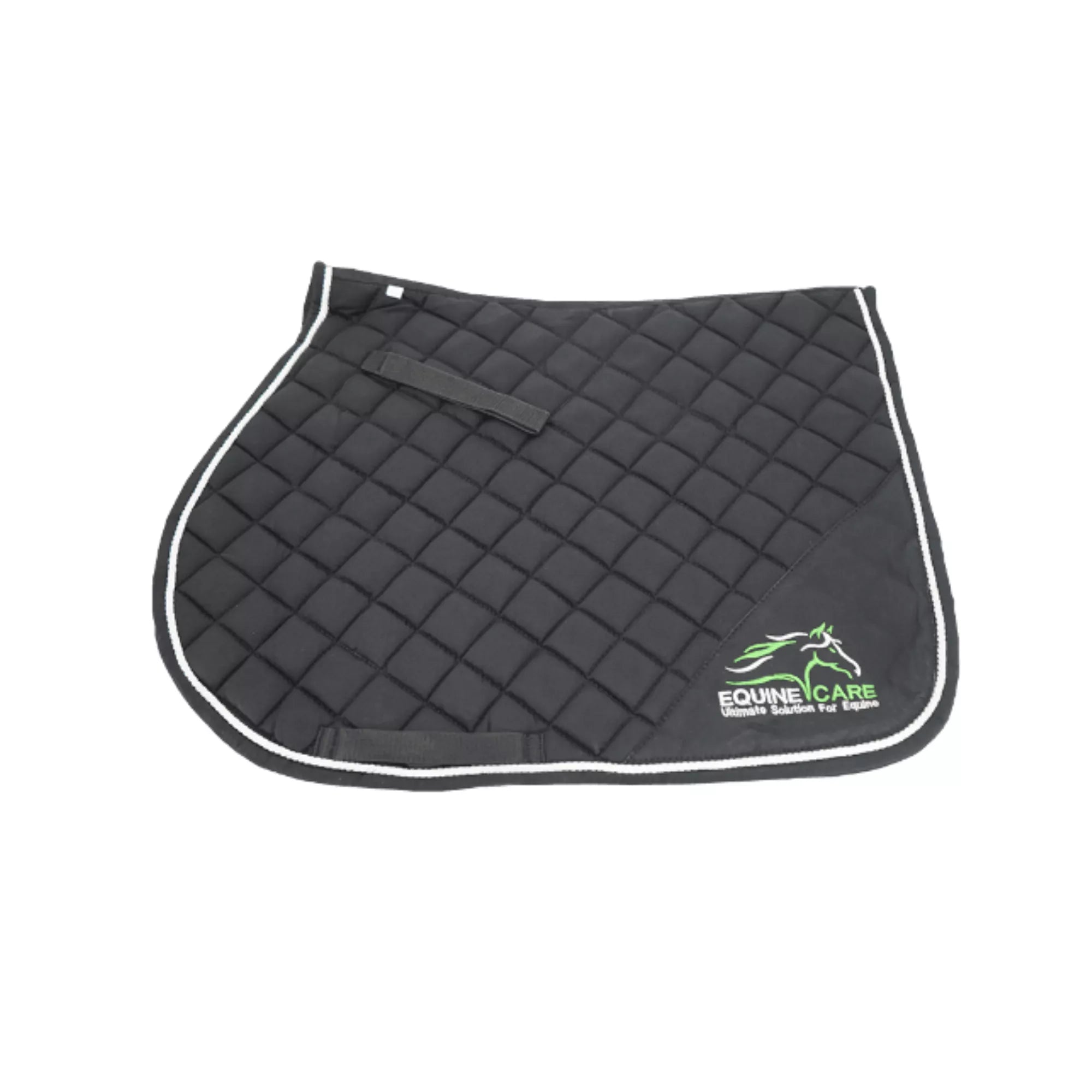
All Purpose English Horse Saddle Pad
Best for daily schooling and multi discipline riders
Why Choose This Pad
- Versatile cut suits jumping, dressage, schooling, and trail riding on one pad.
- Quilted polyester shell with shock absorbing layered padding for daily comfort.
- Breathable underside helps regulate heat and sweat across long sessions.
- Reinforced billet straps and girth loops keep the pad seated through transitions.
- Machine washable for easy cleaning between rides.
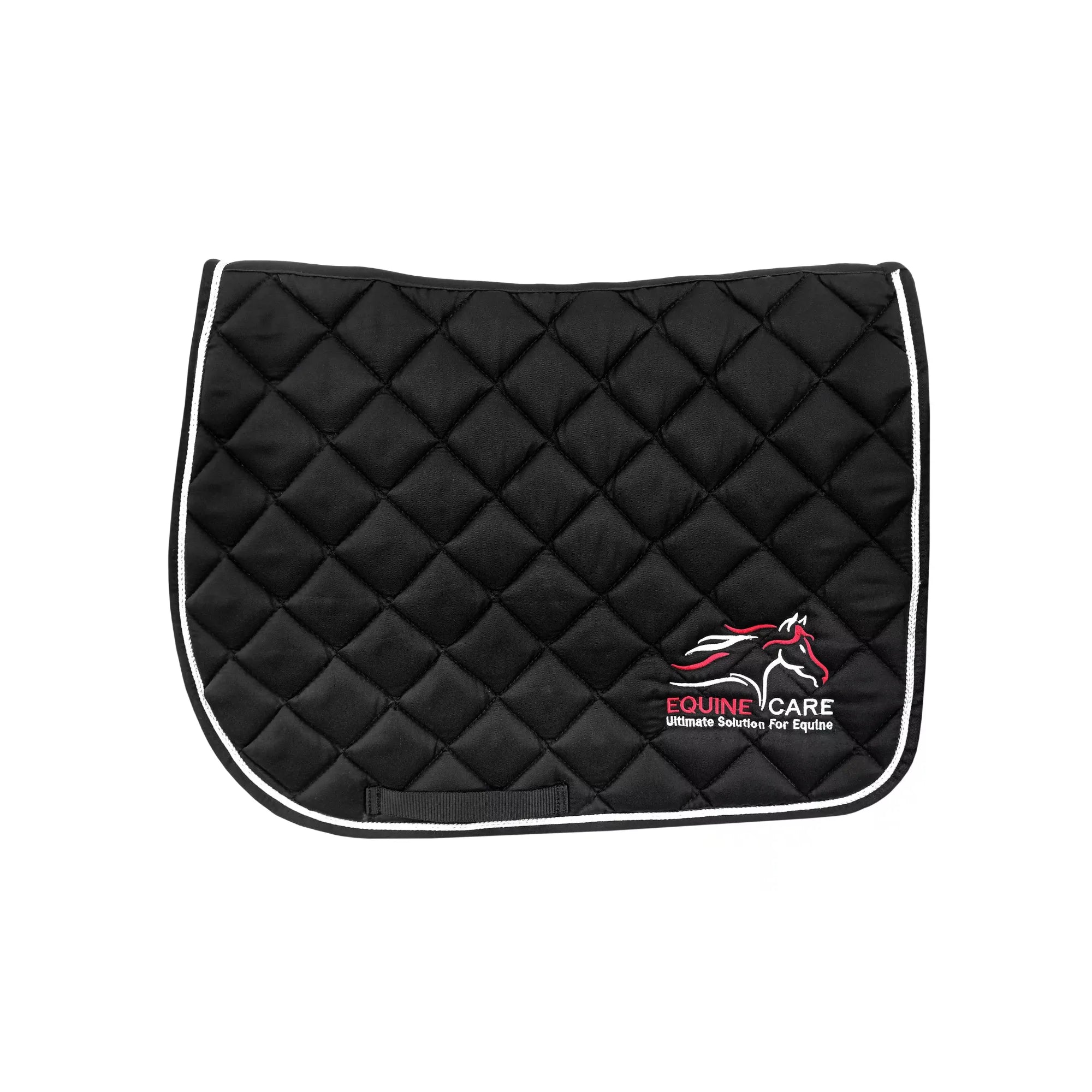
All Purpose Quilted English Saddle Pads
Best for riders wanting premium cushioning
Why Choose This Pad
- 20mm shock absorbing core combining 12mm foam and 200g polyfill for premium cushioning.
- Diamond quilted polyester shell with embroidered Equine Care logo for a clean show ready outline.
- Soft textured breathable lining wicks sweat and protects against rub sores.
- Contoured fit clears high withers and suits English saddles from 16 to 18 inches.
- Available in classic black and bottle green colorways.
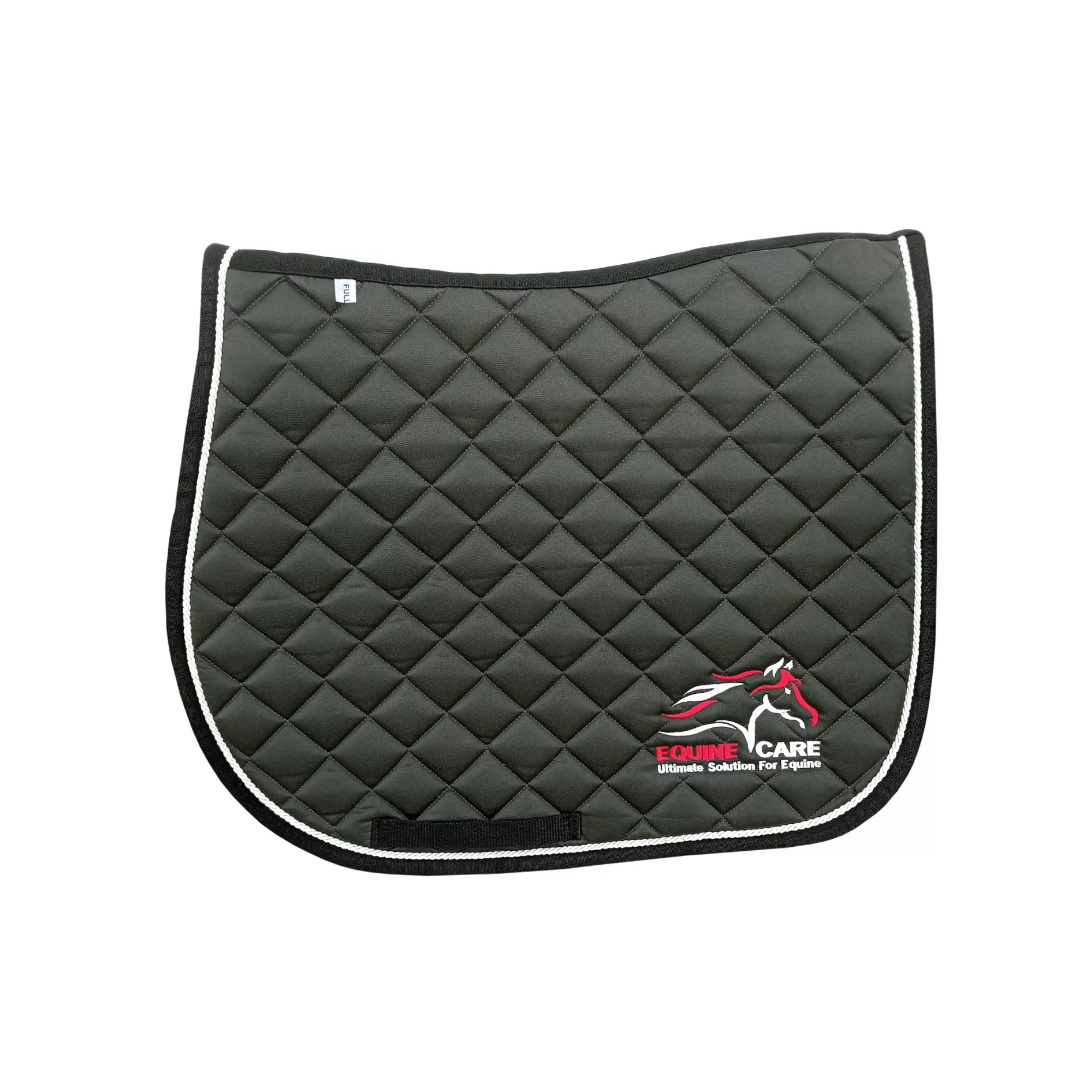
Equine Care Full Size English Saddle Pad
Best for warmbloods, drafts, and broad backed horses
Why Choose This Pad
- Generous cut at approximately 26.5 by 25 inches gives full coverage for warmbloods, drafts, and broad backed horses.
- 12mm foam layered with 200g polyfill core for reliable shock absorption during dressage, jumping, and training.
- Honeycomb mesh underside provides active airflow and a non slip grip on the horse's coat.
- Quilted polyester top with contrast rope piping and double stitched seams for season after season durability.
- Available in olive green, blue, and gray colorways.
Saddle Pad Materials Explained
Saddle pad materials directly influence comfort, durability, and breathability. Each material has unique characteristics that suit certain riders, horses, and conditions.
Cotton Saddle Pads
Cotton pads are soft, breathable, and gentle against the horse's coat. They are favored by casual riders and entry level owners because the natural fiber feels comfortable and absorbs sweat well.
The downside is that cotton compresses faster than synthetic alternatives, so cotton pads often need replacing sooner. They also take longer to dry between rides, which is a real disadvantage for riders who ride daily.
Quilted Saddle Pads
Quilted pads use a diamond stitched outer shell that holds inner padding in place. The stitching prevents the fill from bunching or shifting, which is the most common failure mode of cheaper pads.
Quilted pads are typically made from polyester or a polyester cotton blend, giving the durability of synthetic materials with a softer feel on the surface. The diamond pattern also makes wear obvious early, since broken stitching shows up clearly before the pad has actually failed.
Polyester Saddle Pads
Polyester is the dominant material in modern English pads because it resists compression, holds color through repeated washing, and dries faster than cotton. Most quality saddle pads, including the three offered by Equine Care, use polyester shells.
The material accepts embroidery cleanly, which is why most show ready pads feature stitched logos on polyester surfaces. Polyester pads outlast cotton equivalents by years, making them the better value choice for serious riders.
Wool and Felt Saddle Pads
Wool and felt pads are common in Western disciplines and traditional English riding. Wool naturally wicks moisture, regulates temperature, and resists odor better than synthetic alternatives. Felt is denser, providing strong shock absorption under heavy saddles.
Both materials are heavier and require careful cleaning, but they last for many years when maintained properly. Many riders consider a quality wool pad an investment piece that improves with age as the fibers mold to the horse's back.
Moisture Wicking Materials
Moisture wicking materials are engineered fabrics that pull sweat away from the horse's skin and release it into the airflow above. Common examples include perforated foam, honeycomb mesh polyester, and synthetic wool blends.
These materials are essential for hot climates, long rides, and sweat prone horses. They protect the skin from prolonged moisture, which is the leading cause of rubs under tack and the trigger for most fungal skin issues riders deal with in warm seasons.
Saddle Pad Sizing Guide
The right saddle pad size depends on your horse's height, build, and the saddle you ride. English saddle pads follow a four step ladder: pony, cob, full, and extra full. Choosing the correct size protects your horse's back and keeps the saddle balanced through every ride.
|
Pad Size |
Spine Length |
Drop Length |
Horse Height |
Best For |
|
Pony |
18 inches |
16 inches |
Under 13.2 hands |
Ponies and small horses |
|
Cob |
20 inches |
18 inches |
14 to 15.2 hands |
Arabs, Welsh crosses, finer builds |
|
Full |
22 inches |
21 inches |
15 to 17 hands |
Standard horses, Thoroughbreds, Quarter Horses |
|
Extra Full |
26 inches |
25 inches |
16 to 17 hands and up |
Warmbloods, drafts, broad backed horses |
Use this chart as a starting point, but always confirm the fit against your specific horse and saddle before committing to a size.
How a Saddle Pad Should Fit and When It Is Too Small or Too Large
A properly fitted saddle pad extends one to two inches beyond the saddle skirt on all four sides. The pad should sit smoothly under the saddle with no bunching at the front, no wrinkles along the spine, and clear gullet space above the withers. The billet straps should fasten without strain, and the girth loops should hold the pad firmly in place.
A pad is too small when the saddle skirt overhangs the edges. This creates uneven pressure points where the panel rests partly on pad and partly on coat, and it leads to rubs and pressure sores over time. A pad is too large when the edges flap loose beyond the saddle, which can interfere with rein contact, leg position, or aids.
The British Horse Society recommends measuring both your saddle and your horse's back length before purchasing a pad, then choosing a size that gives clear margin without excessive overhang.
Saddle Pads for Different Riding Situations
Different riding situations create different demands on a saddle pad. The right pad for arena schooling is not the same as the right pad for a four hour trail ride.
Everyday Schooling
Everyday schooling demands a durable, machine washable pad that holds shape after dozens of uses. An all purpose cut with quilted polyester construction handles flatwork, pole work, and the occasional small jump.
Choose a darker color to mask everyday dirt, and rotate two pads if you ride daily so each has time to dry between sessions.
Trail Riding
Trail riding requires pads with strong shock absorption, breathable backing, and a non slip underside. Long hours in the saddle, varied terrain, and uphill or downhill stretches all stress the pad's ability to stay seated.
A wider cut works better on trail because it covers more of the horse's back during sustained work. Trail riders should plan to wash pads more frequently than arena riders, since dust, mud, and sweat build up faster on the trail.
Dressage Training
Dressage training demands a straight cut pad that matches the vertical flap of a dressage saddle. Cushioning matters more than people expect because sitting trot and half pass transmit significant pressure through the rider's seat.
A pad with 12mm foam and a sweat wicking lining is the right choice for daily dressage work. For competition, switch to a plain white dressage pad as required by FEI and USEF rules.
Jumping and Eventing
Jumping and eventing demand pads with heavy shock absorption and reinforced anchoring. Landing impact transmits force directly into the horse's back, particularly across the front panels and loin.
Choose a pad with substantial foam cushioning, double stitched seams, and a textured underside that grips the coat through technical lines. Avoid thin schooling pads under heavy jumping work because they compress too quickly and lose protection within a single season.
Warm Weather Riding
Warm weather riding makes breathability the priority. A honeycomb mesh underside or perforated foam keeps air moving and sweat away from the skin. Choose a lighter color to reflect heat, and rotate pads daily so the fabric dries fully between rides.
Watch your horse for signs of heat stress, and shorten sessions during the hottest part of the day.
Here is the key thing to remember: the right pad changes based on what you are doing that day. Owning two or three pads matched to different situations protects your horse better than relying on one pad for every ride.
How to Clean and Maintain a Saddle Pad
A well cared for saddle pad lasts for several years and continues to protect your horse session after session. A neglected pad compresses, hardens, and starts causing the very problems it was meant to prevent.
Daily Care
Daily care starts the moment you untack. While the pad is still damp from sweat, brush off loose hair and dirt with a stiff brush or curry comb. Sweat and grit lift far more easily before they dry into the quilting.
Hang the pad to air dry in a clean, dry area, and never put a wet pad away folded or rolled. Damp storage causes mildew and breakdown of the foam.
Washing Instructions
Most quality English pads benefit from regular hand washing rather than machine washing. Soak the pad in cool water with a gentle horse safe detergent, work the suds through the quilting by hand, rinse thoroughly, and lay flat to air dry.
Avoid hot water, tumble drying, bleach, and harsh detergents. Each damages the foam core and shortens the working life of the pad. The Society of Master Saddlers recommends checking your pad's specific care label, since some tolerate cool machine washing while others are strictly hand wash only.
Proper Storage
Store pads flat or loosely rolled in a clean, dry tack area between rides. Avoid hanging pads from a single hook for extended periods because the weight stretches the fabric and distorts the shape.
Keep pads away from direct sunlight when storing long term, since UV exposure fades colors and breaks down synthetic fibers. With proper storage, a quality pad holds its shape and structure for many seasons.
Frequently Asked Questions
What is the purpose of a saddle pad?
A saddle pad protects the horse's back from the saddle by distributing pressure, absorbing shock, managing sweat, and preventing rubs. It also extends the working life of the saddle itself by absorbing sweat and dirt that would otherwise damage the leather panels. Every horse should ride in a properly fitted pad regardless of discipline, build, or age.
How do I choose the right saddle pad?
Choose your saddle pad by matching it to four factors: your riding discipline, your horse's build and size, your specific saddle shape, and how much cushioning your horse needs. Start with the cut required for your saddle, confirm the size fits your horse's back, then select materials that suit your climate and training intensity.
What size saddle pad do I need?
English saddle pads come in four sizes. Pony pads suit horses up to 13.2 hands. Cob pads fit Arabs, Welsh crosses, and finer built horses around 14 to 15.2 hands. Full pads suit standard horses 15 to 17 hands. Extra full or oversized pads fit warmbloods, drafts, and broad backed horses. Measure your horse's back length and compare to pad dimensions before ordering.
Are thicker saddle pads better?
Thicker pads are not automatically better. The right thickness depends on your discipline, saddle fit, and horse's build. For English riding, 12mm is the professional standard. Going thicker can lift the saddle too high above the horse and disturb the panel contact your saddle was originally fitted for. More padding does not equal more comfort if it changes how the saddle sits.
How often should I wash my saddle pad?
For pads in regular use, a full hand wash every two to four weeks is standard. Brush off loose hair and dirt daily while the pad is still damp from sweat. If you ride daily or in hot weather, alternate two pads so each has time to air dry fully between rides. This prevents bacterial buildup and keeps the foam core from compressing against damp fabric.
How long do saddle pads last?
A quality saddle pad lasts three to five years with proper care, sometimes longer for premium pads ridden lightly. Replacement signs include compressed foam that no longer springs back, broken stitching along the quilting, persistent staining that will not wash out, and uneven cushioning under the saddle. Once you notice these signs, replace the pad before it starts causing pressure points.
How a Saddle Pad Should Fit
A correctly fitted saddle pad lies smooth and even under the saddle from withers to loin. Look at the pad from the side after tacking up. There should be no wrinkles along the spine, no bunching at the front, and a clear gullet space above the withers.
The pad should extend one to two inches beyond the saddle skirt on all sides, with no overhang where the saddle ends before the pad does. Test the fit with a saddle skirt check before riding. Place the pad under the saddle, tighten the girth, and walk your horse a few steps.
The pad should stay seated without shifting. If the pad slides back, slips sideways, or bunches at the withers, recheck the size and confirm the billet straps are properly looped. The American Association of Equine Practitioners notes that consistent pad fit is one of the most important factors in preventing chronic back issues in working horses.
When Should You Replace a Saddle Pad?
Replace your saddle pad when the foam core no longer springs back after compression, when stitching breaks along the quilting, or when persistent staining will not wash out. These signs mean the pad has reached the end of its working life and is no longer protecting your horse effectively.